

Quintessence Shuzo KISHIDA
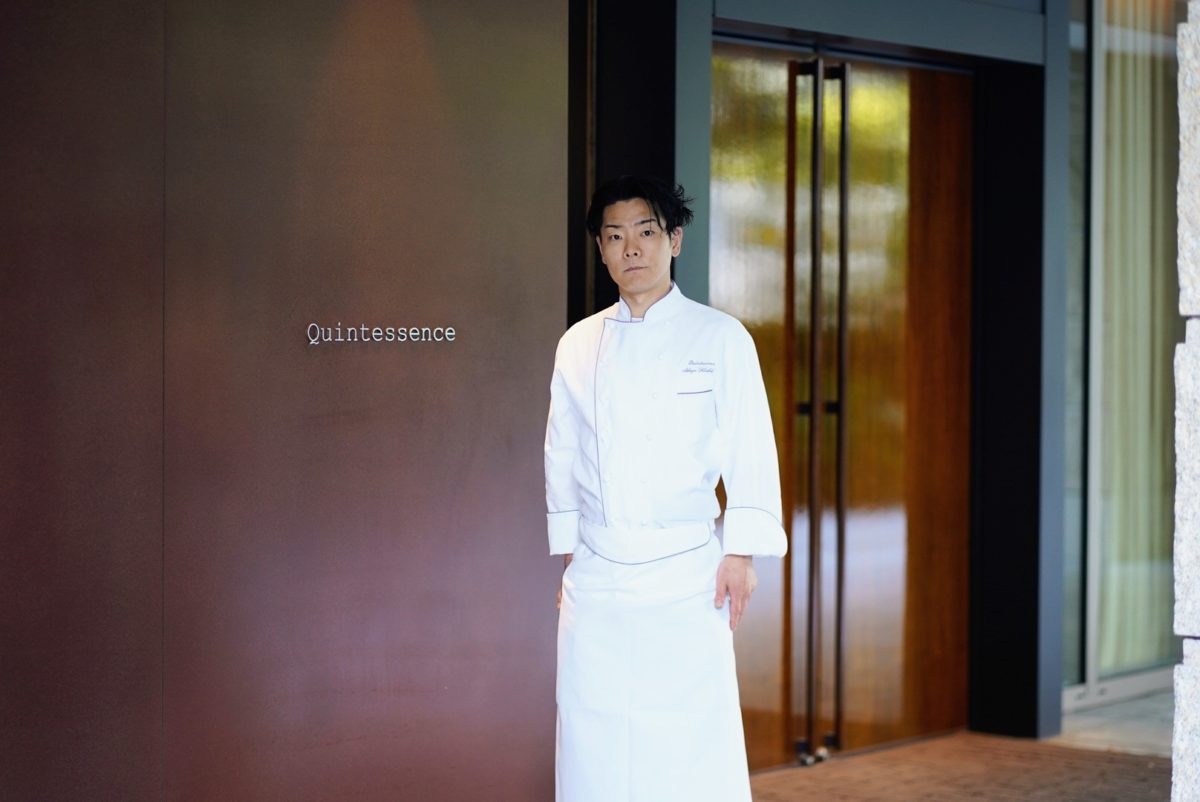
“Abundance, luxury, and deliciousness—I believe the measures of these change over time.
We now live in times of depleted stocks of high-quality produce, making it difficult to obtain a steady supply. It will become more difficult to offer cuisine focused on the ingredients themselves. I think we are headed for an era in which chefs are expected to possess both techniques and creativity.”
Vol. 1 of the Chefs for the Blue Member Interviews features Chef Shuzo Kishida of Quintessence—a restaurant that has earned three Michelin stars for 16 consecutive years as of October 2023. He talked about abundance in future generations and how restaurants can convey that to guests.
__________________
Chef Kishida of Quintessence sensed a change in the oceans more than a decade ago.
“Every year, the fish got smaller, and their quality declined. Countless times, I would place an order only to be told there was no stock. I was constantly thinking about why this was happening.”
Kishida began joining Chefs for the Blue seminars in 2017. It was there that he learned about the striking changes in Japan’s coastal waters, and how a major factor for the changes was a man-made one—that of overfishing.
“I was shocked, but it also made so much sense.”
Until then, Kishida had simply ordered whatever he wanted.
“Beyond mere variety, I would also specify the exact size I wanted. Brokers could show off their skills, gathering the seafood items that met those specifications. And because I considered them members of the Quintessence team, I never held back and shared my detailed wishes with them. At the time, I felt like we were working hard on a shared goal, but now I can see that it was quite selfish.”
The seminars made Kishida realize that such behavior places an excessive burden on the oceans. Before he knew it, a shift occurred, and it became routine to start a conversation with the question, “What did you get from the ocean today?”
That said, Kishida has not abandoned his demand for high-quality produce. In the past, one Tsukiji broker provided everything. Now, Kishida deals with fishermen and brokers across Japan. His orders are placed daily based on the catches.
It definitely complicates ordering, and the period during which he can use a certain variety of fish is shorter.
But, he says, “there are still so many types of fish in Japan that I’ve never heard of. In France, across one year, they use at most 20 fish varieties. It’s made me aware anew of the richness of Japan’s oceans.”
The fact is, of the approximately 15,000 marine creatures found in the world’s oceans, around 3,700, or 25%, live in Japan’s coastal waters. Among those, we catch and eat approximately 400 fish varieties.
Kishida says that even for fish he’s never heard of, if it comes recommended and piques his interest, he’ll take delivery and try cooking with it. If it’s good, he’ll proudly add it to his menu.
“Luxury and deliciousness—I believe the measures of these change over time. With beef, too, more and more people appreciate the goodness of lean red meat. The era of obsessing over typical high-end fish is probably over.
Creating delicious dishes to delight guests using fish nobody has ever heard of and finding value in previously discarded parts—that’s luxury in the truest sense. That is what will constitute specialty service going forward.
We are headed for an era in which chefs will be increasingly expected to possess both techniques and creativity.”
Because popular fish varieties are meticulously handled after being caught, they arrive at restaurants in excellent condition. If chefs discover the value in less-used fish, fishermen and brokers will start handling them in the same way as the premium varieties. Chef Kishida believes the result will be even higher quality.
“Some chefs may feel restricted by the concept of sustainability. For me, too, I certainly don’t have the same choice of ingredients I used to have. But I think that will lead to new ideas about abundance and luxury fitting our times.
We can gain a lot from first understanding the issues our oceans face.
We still don’t have a clear action plan, but there is no need to aim for perfect sustainability from the outset. Our task is to find actions that individuals can implement in small increments.
For me, that means sharing the current reality through the dishes we serve at the restaurant and various media channels. It’s going to take time, but I hope to join forces with everyone to create a giant swirl of momentum.”