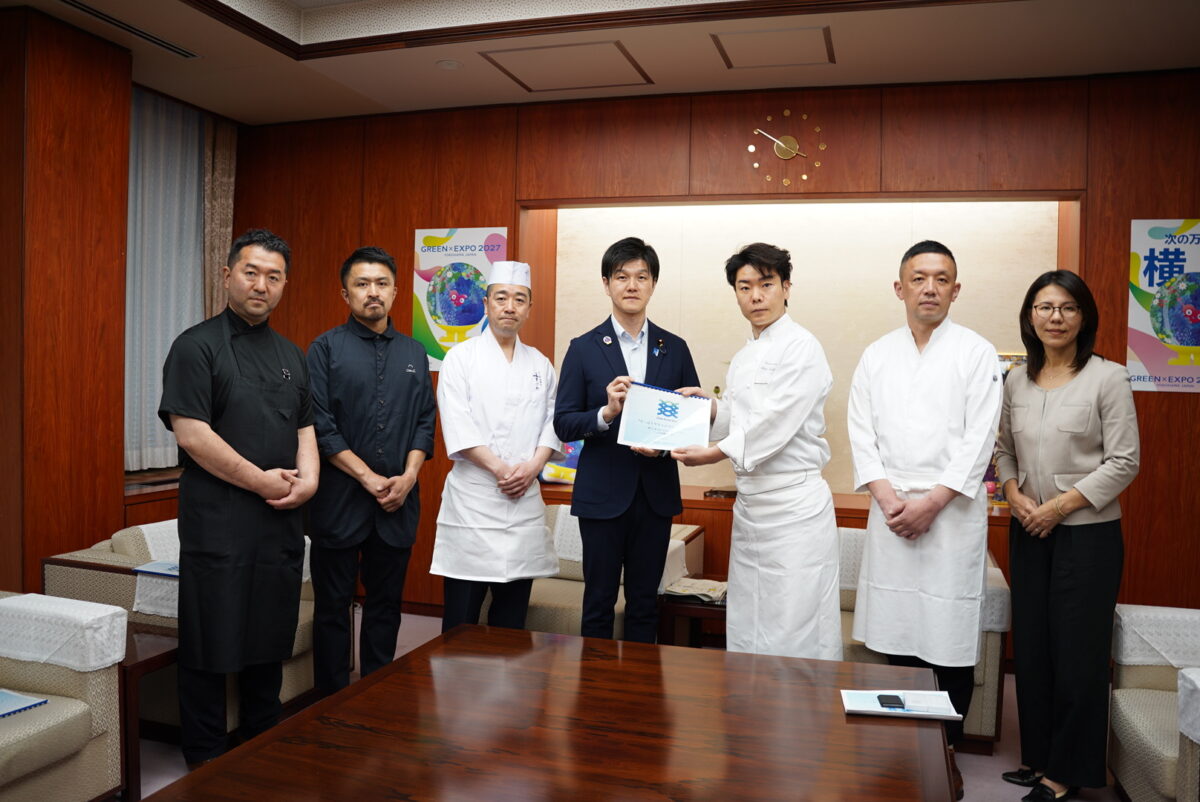
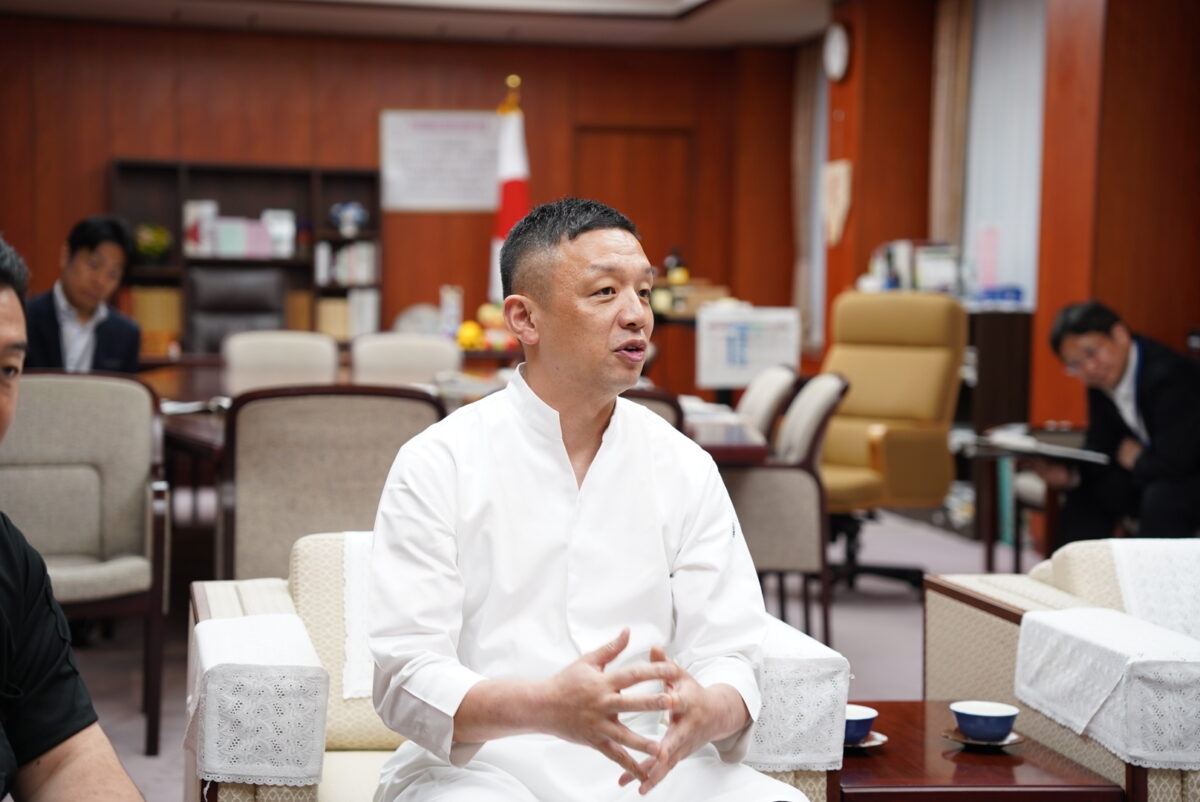
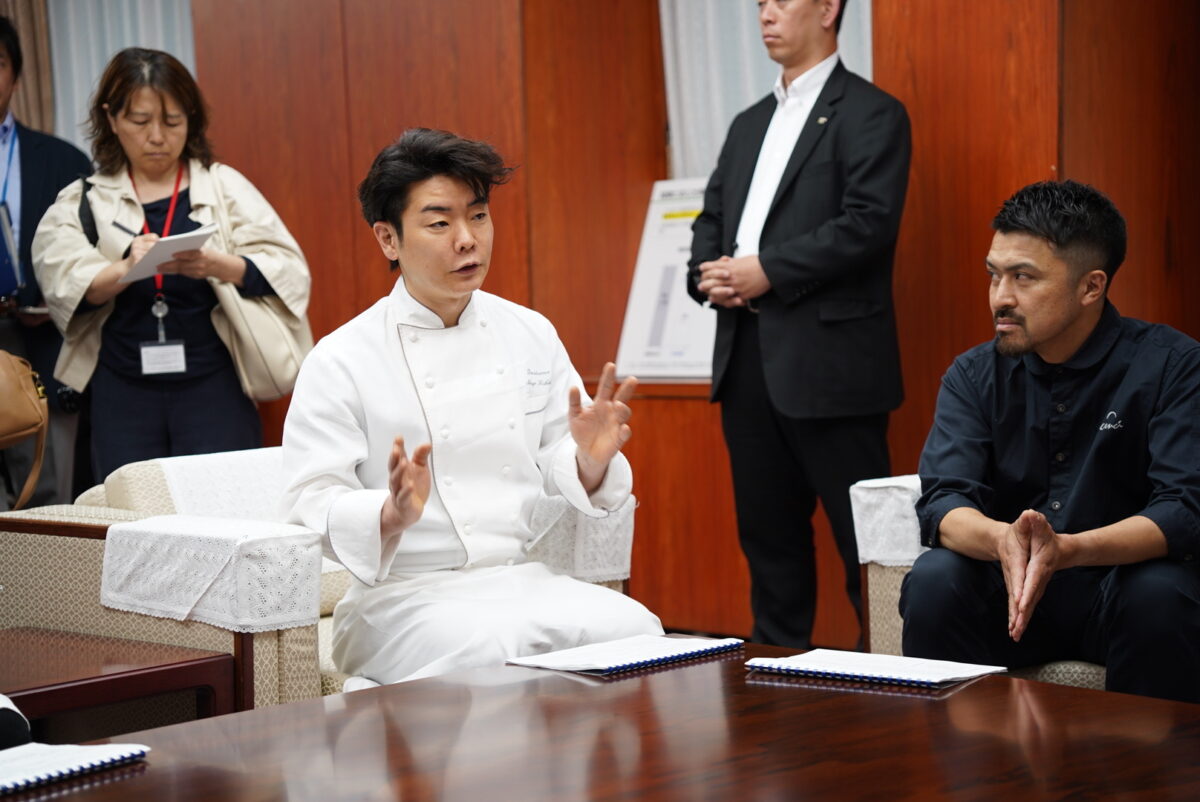
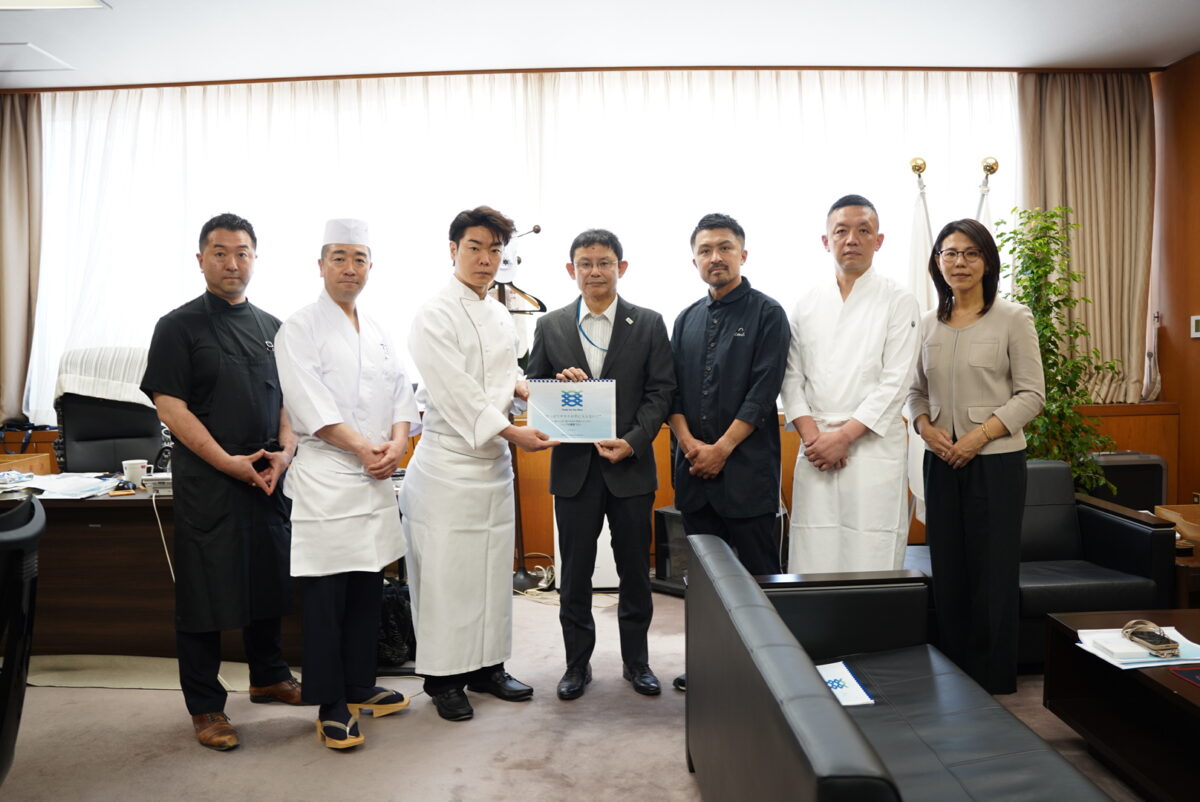
Submitted a policy proposal document to Minister of Agriculture, Forestry and Fisheries Suzuki and Director-General, Fisheries Agency Fujita.
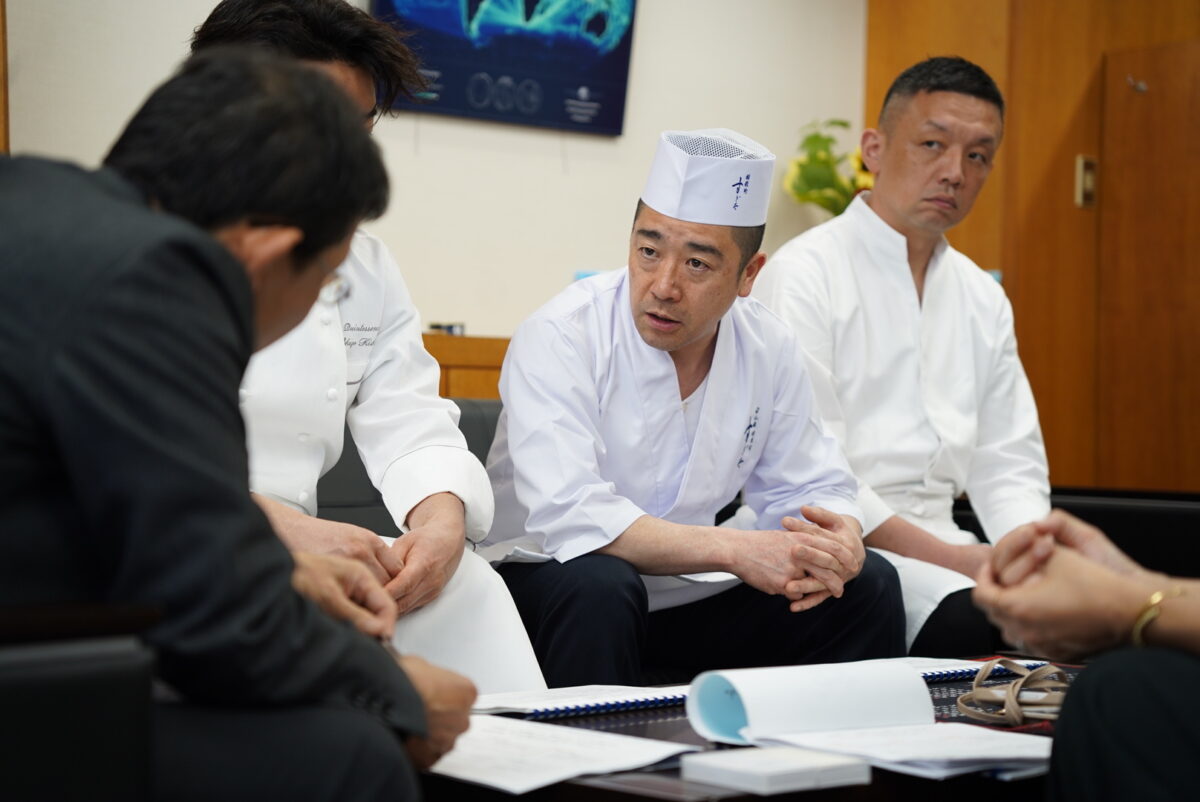
Following last year’s efforts, we submitted a policy proposal to Minister of Agriculture, Forestry and Fisheries Suzuki and Director-General, Fisheries Agency Fujita aimed at restoring fishery resources and preserving Japan’s food culture. This year, we placed particular focus on measures for coastal fisheries, presenting data that highlighted seafood as “a growth engine for the Japanese economy.” We also engaged in extensive, in-depth discussions over an extended period of time.
1. Japan’s fish-eating culture — a world-class cultural asset
Japan is blessed with seas that are home to approximately 3,700 fish species out of the world’s 15,000 known species. For generations, Japanese cuisine has utilized around 400 different kinds of seafood, supporting the nation’s health, daily life, and culinary richness. This food culture has been sustained through the relay of skills and knowledge across fisheries, distribution, and retail sectors, while the restaurant and tourism industries have expanded its reach. Japan’s fish-eating culture is not only a cultural asset admired around the world, but also an economic foundation that generates broad economic circulation and employment.
2. Food security — Wild fish are Japan’s only self-sufficient source of protein
Japan faces structural challenges in protein self-sufficiency, with effective self-sufficiency rates (taking feed self-sufficiency into account) standing at 12% for beef, 6% for pork, 13% for eggs, and 7% for soybeans. In contrast, wild fish represent Japan’s only major protein source that can be self-sustained without dependence on imported feed or large-scale agricultural land. Japan possesses the world’s sixth-largest Exclusive Economic Zone (EEZ), covering an area approximately 12 times the size of its land territory, and has cultivated a long history and sophisticated food culture centered around diverse marine resources. In 1964, Japan even achieved a seafood self-sufficiency rate of 113%. As risks associated with import dependency continue to grow, maximizing the sustainable use of domestic wild fish resources is an essential pillar of Japan’s food security policy.
3. Economic growth — Seafood is a “hidden” engine of the Japanese economy
The value of seafood cannot be measured solely by the fisheries production value itself (¥1.6 trillion in 2024). Through Japan’s domestic value chain, seafood products gain significant added value, expanding to approximately 7.2 times their initial wholesale value when reaching the restaurant industry. Of the approximately ¥26.2 trillion generated by Japan’s food service industry in 2024, an estimated ¥7.3 trillion is derived from seafood-related business. In addition, 82.8% of inbound visitors to Japan in 2024 said they looked forward to eating Japanese cuisine, while 33.3% cited it as their primary motivation for visiting Japan. Among the 339 Michelin-starred restaurants listed in the Michelin Guide Tokyo/Kyoto-Osaka 2026, approximately 65% (221 restaurants) specialize in seafood-centered cuisine. Supported by an advanced value chain and the exceptional craftsmanship of Japanese chefs, Japan’s fish-eating culture represents a unique “killer content” that cannot easily be replicated by other countries.
4. Growing difficulties in seafood procurement for restaurants
Despite this cultural and economic significance, restaurants that have long supported Japan’s fish-eating culture are now facing severe difficulties in procuring seafood. According to a nationwide survey conducted by Chefs for the Blue in May 2025 involving 1,301 restaurant professionals, 95.2% responded that “the volume of seafood available in markets has decreased,” while 98.2% expressed “a sense of crisis regarding future procurement.” The sharp decline in available fish species and overall supply, combined with rising prices, has made sourcing seafood dramatically more difficult, leaving many businesses deeply concerned about the future. The growing disconnect from seafood among the very people who should be carrying this cultural baton forward is not only a threat to Japan’s food culture itself, but also a serious risk to the continuity of technical expertise, the stability of the economic foundation surrounding seafood, and the sustainability of Japan’s domestic supply chain.
Key Issues and Concerns
Issue 1 (Production Phase): Inadequate scientific resource management and the sharp decline of coastal fishery resources
Although the revised Fisheries Act promoting science-based resource management came into effect in 2020, the downward trend in marine resources has yet to be reversed. Japan’s marine fishery catch has declined by 76%, falling from its peak of 11.51 million tons in 1984 to just 2.78 million tons in 2024. The self-sufficiency rate for edible seafood has also dropped by half from 113% in 1964, remaining at around the 50% level in recent years. In particular, many high-value coastal fish species continue to decline while still lacking sufficient science-based resource management measures. Of the 62 seafood varieties traditionally used in Edomae sushi, only nine are currently subject to scientifically grounded catch management. The future of Edomae sushi — one of the cultural symbols that has attracted visitors from around the world to Japan — is now facing a serious crisis.
Issue 2 (Distribution Phase): Distortions in post-harvest allocation — excessive diversion to non-food use and export-oriented distribution
Serious distortions also exist in how seafood is utilized after landing. Approximately 81% of Japanese sardines (the nation’s most-caught species) and 60% of mackerel species (the third most-caught) are diverted to non-food uses such as aquaculture feed. As food prices continue to rise, affordable sources of protein are increasingly disappearing from Japanese dining tables. In particular, mackerel fisheries have become heavily dependent on the continuous harvest of juvenile fish, undermining the species’ ability to reproduce and recover. In addition to large-scale non-food use, 28% of total mackerel catches are exported at low prices. At the same time, Japan imports larger, higher-value mackerel from countries such as Norway at premium prices — a contradiction that highlights the urgent need to fundamentally reform current harvesting structures. Furthermore, because the government’s growth strategy places strong emphasis on exports, success indicators have become overly focused on export value alone, while the value created through Japan’s domestic seafood value chain remains largely invisible within economic policy. Exporting seafood at the upstream stage of the value chain effectively means exporting not only the fish themselves, but also the added value, employment opportunities, and economic benefits that could otherwise have been generated domestically.
Issue 3 (Consumption Phase): Policy failing to keep pace with changing consumption patterns — insufficient coordination with the restaurant and tourism sectors
Japan’s Fisheries White Paper (2019 edition) itself points out that seafood consumption in Japan has shifted away from home cooking toward prepared foods and dining out. Demand for seafood within the restaurant industry is enormous, accounting for an estimated ¥7.3 trillion of the industry’s ¥26.2 trillion market size. Meanwhile, inbound visitors to Japan spent approximately ¥2.07 trillion on dining, and 68.3% of foreign tourists reported eating sushi during their stay. Despite this, analysis of seafood consumption trends within the restaurant, ready-made meal, and tourism sectors remains limited. Coordination between fisheries policy and tourism or food-service policy is weak, and the introduction of traceability systems linking production and consumption has been slow. The deterioration of Japan’s fish-eating culture — one of the nation’s defining tourism assets and cultural “killer contents” — could ultimately undermine the very foundation of Japan’s inbound tourism and regional revitalization strategies.
Policy Proposals: Five Concrete Measures
1. Strengthening science-based management of coastal fishery resources following offshore resource reforms (Addressing Issue 1)
Establish a new 10-year plan to double dedicated funding for coastal fishery resource surveys and research conducted by fisheries research institutions, including the Japan Fisheries Research and Education Agency and prefectural fisheries experimental stations. Many coastal fish species that have historically received insufficient policy attention are highly valued within the restaurant industry and serve as important tourism resources supporting regional economies. By managing coastal resources based on scientific data, Japan can accelerate resource recovery while also driving economic growth across the entire fisheries value chain.
2. Positioning wild seafood as a strategic national resource for food security and institutionalizing food-priority allocation of marine resources (Addressing Issue 2)
Position wild seafood as an essential strategic resource for Japan’s food security and implement effective measures to improve the nation’s food self-sufficiency rate. Specifically, establish systems that prioritize species with high catch volumes — such as mackerel and sardines — for human consumption, helping restore affordable domestic seafood to Japanese dining tables amid rising food prices. In addition, drawing on the successful recovery measures implemented for Pacific Bluefin Tuna, introduce regulations such as minimum catch-size restrictions to reduce the current overreliance on harvesting small, immature mackerel. This would support both resource recovery and an increase in larger, food-grade mackerel suitable for domestic consumption. At the same time, promote efforts within aquaculture — particularly for carnivorous farmed fish — to reduce dependence on fishmeal and fish oil, with the goal of cutting current dependency levels by more than half over the next decade.
3. Establishing “Domestic Seafood Value Added” as a national fisheries policy KPI (Addressingissues 2 and 3)
Introduce “Domestic Seafood Value Added” as a new key performance indicator (KPI) for measuring the growth of Japan’s fisheries sector, and formally incorporate it into the nation’s Basic Fisheries Policy. This indicator would measure the total added value generated across the entire seafood value chain — including fisheries production, seafood processing, distribution, seafood-related restaurants, and tourism industries — rather than focusing solely on fisheries output value itself. By publishing this figure annually, Japan can better visualize and recognize the full economic contribution seafood makes to the national economy and integrate it into broader national growth strategies. At the same time, while prioritizing sustainable resource management above all else, the Basic Fisheries Policy should explicitly position the stable supply of seafood to domestic businesses and consumers as a core policy priority.
4. Building a national seafood traceability infrastructure (Addressing Issues 2 and 3)
In coordination with Japan’s “Digital Transformation (DX) for Agriculture, Forestry, Fisheries, and Food Industries” initiatives, promote the digitalization of production and resource management data while improving transparency throughout seafood distribution channels. Establish a low-cost information-sharing system utilizing technologies such as blockchain across every stage of the seafood supply chain — including fishers, fisheries cooperatives, landing markets, processors, wholesale markets, retailers, and restaurants — in order to create an information infrastructure that makes sustainable fishing practices and responsible resource management visible. By enabling businesses and consumers to make informed, sustainable seafood choices, this system would support producers engaged in responsible fisheries practices and contribute to the recovery of marine resources. Dedicated budgetary measures should be implemented to support this initiative.
5. Strengthening the foundation of Japan’s fish-eating culture through collaboration with the restaurant and tourism sectors (Addressing Issue 3)
The people working at the forefront of extracting the full value of domestic seafood are the chefs and culinary professionals active in Japan’s restaurant and tourism industries. To fully leverage this national strength, Japan should actively promote collaboration between the restaurant/tourism sectors and domestic seafood producers. This should be positioned as a cross-sector policy package spanning the Basic Fisheries Plan, the Basic Plan for Tourism Nation Promotion, and the Comprehensive Regional Revitalization Strategy. In addition, regular roundtable discussions should be established involving chef organizations, fishers, fisheries research institutions, tourism operators, and government agencies to strengthen cooperation and develop long-term strategies for sustaining Japan’s fish-eating culture and seafood economy.